
Need a Tuesday Evening Reset? Meet Grounded Power Flow

Need a Tuesday Evening Reset? Meet Grounded Power Flow

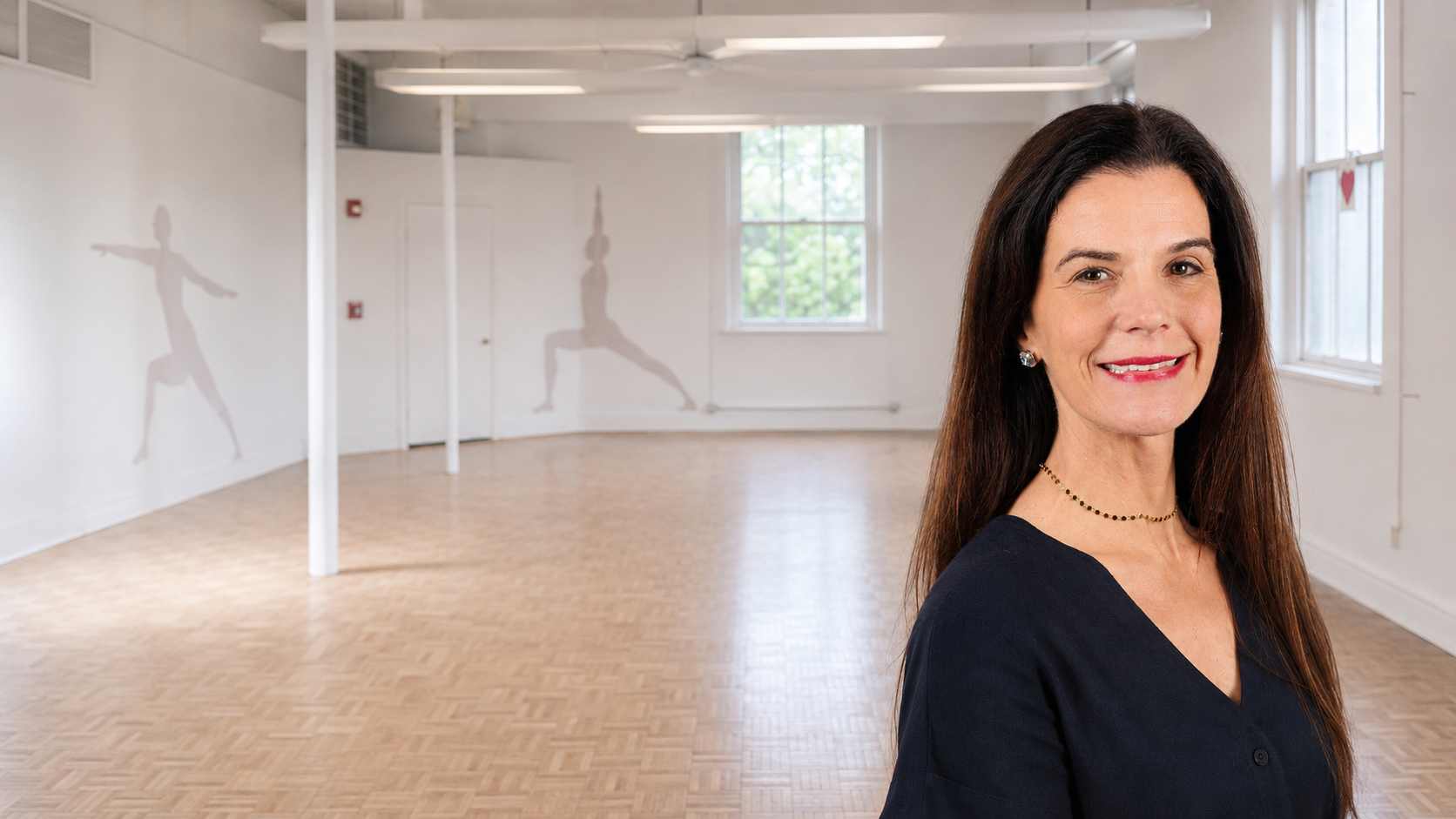
A stronger, steadier yoga class with Lisa Manecke, beginning Tuesday, May 26, at Yoga Among Friends.

Some yoga stories begin with a deep spiritual calling.

Lisa Manecke’s began with a co-worker sprinting out the door with a yoga mat.

It was 1997, and Lisa was working as a marketing assistant in Indianapolis. Once a week, her marketing manager would leave work with her mat tucked under her arm. Lisa asked where she was going.

Yoga.

What Lisa noticed next stayed with her. If this co-worker missed yoga, she was not happy. But when she went, she seemed centered, energized, beautiful, and, as Lisa remembers, “soooo cool.”

So Lisa signed up for a yoga class at the Y the very next week.

“I have been hooked ever since,” she says.

“I have been hooked ever since”


From One First Class to a Lifetime of Practice

Nearly three decades later, Lisa still practices almost every day. Yoga has moved with her through many seasons of life, and it has become something she can return to again and again.

“You really don’t need anything to do it,” Lisa says. “You can do it anywhere — and I have. Any amount of yoga makes you feel better about life.”

That lived love of practice is what she brings to Grounded Power Flow, her new Tuesday evening class at Yoga Among Friends in Downers Grove.

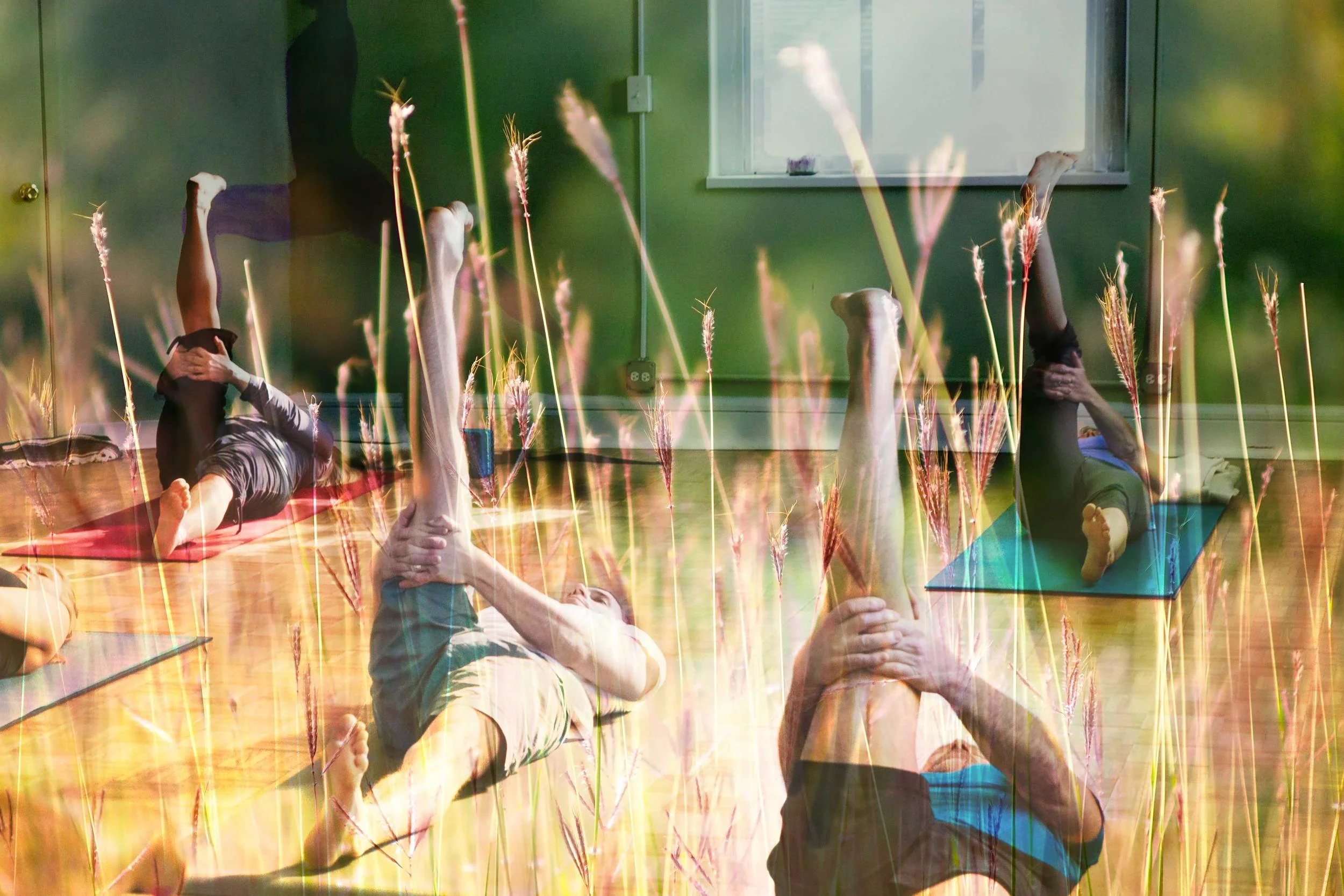
Grounded Power Flow begins Tuesday, May 26, from 6:00–7:15 PM. This active, steady evening class blends mindful movement, breath, strength, and spacious stretching to help students release the day and reconnect to themselves.

Maybe you have had a moment like that, too — seeing someone return from yoga a little softer, lighter, or more like themselves, and wondering, What is happening in that room?


What Lisa’s Class Feels Like

Lisa describes her teaching style as traditional, with a foundation in Ashtanga-based flow. Her own practice is rooted mostly in Ashtanga, and she brings that steady structure into class in a way that is clear, curious, and accessible.

She likes to demonstrate. She likes to pause and workshop a pose. She likes helping students discover a new way in.

“I love to teach students something new,” Lisa says, “or a different way to get into a pose.”

So yes, you can expect to move.
You can expect to build heat.
You can expect strength, stretching, breath, and moments of learning along the way.

Lisa puts it more simply:

“Expect to have fun, sweat, stretch, strengthen, and breathe deeper than you’ve breathed all day.”

“Expect to have fun, sweat, stretch, strengthen, and breathe deeper than you’ve breathed all day.”

This is a full-body practice with steady movement, accessible strength-building, heart-opening stretches, and the kind of breath that helps you return to your body after a long day.

It is active, but not frantic.
Strong, but not harsh.
Grounded, but never boring.


Who Grounded Power Flow Is For

Grounded Power Flow is best for students who want a more active yoga practice that still feels mindful, grounded, and supportive.

This class may be a good fit if you are looking for:

  • steady movement after a long day

  • a class that builds strength without losing breath awareness

  • an evening reset that helps you release stress

  • a practice that feels energizing, but not frantic

  • a way to reconnect to your body with more presence and ease

This is not meant to be the gentlest offering on the Yoga Among Friends schedule. If you are brand new to yoga, working with an injury, or looking for a slower, more restorative class, another class may be a better starting place.

But if you are ready to move, breathe, strengthen, and leave feeling clearer than when you arrived, this class may be exactly what your Tuesday evening needs.


A Teacher with Deep Roots and a Light Heart

Lisa completed her 200-hour teacher training through Moksha Yoga Chicago in 2004, where she also managed the Lakeview studio. During that time, she immersed herself in every workshop she could.

Over the years, she has practiced with and studied among many influential teachers, including Pattabhi Jois, Ana Forrest, Tim Miller, Kino MacGregor, Shiva Rea, Seane Corn, Baron Baptiste, Rod Stryker, Dharma Mittra, and others.

That depth is part of what makes her teaching feel grounded. But Lisa does not make yoga feel overly serious or out of reach.

Her favorite teaching themes say a lot:

“Any yoga is better than no yoga.”

“Inversions are like happy pills.”

“Backbends are like pancakes. The first two don’t count.”

That is Lisa.

Deep practice, light heart.

Deep practice, light heart.

A traditional foundation, but room to laugh.
A teacher who loves yoga, lives yoga, and still remembers exactly what it felt like to be inspired by someone walking out the door with a mat.

Now she gets to be that person for someone else.


Join Lisa on Tuesday Evenings

Lisa’s hope is simple: that students leave class feeling better than when they arrived.

Less stressed. More relaxed. A little sweaty. More spacious.

And grateful they carved out the time to practice.

Join Lisa for Grounded Power Flow on Tuesdays from 6:00–7:15 PM, beginning May 26, at Yoga Among Friends in Downers Grove.

Come ready to move, breathe, strengthen, sweat a little, and leave feeling more like yourself.



Shoulder Pain in Yoga: What Teachers Often Miss

Shoulder Pain in Yoga: What Teachers Often Miss

by Jessica Gonsiorowski, RYT 500

A teacher-focused look at how shoulder and neck tension often connects back to thoracic mobility, scapular movement, and compensation patterns.

Shoulder discomfort is one of the most common things yoga teachers see in the yoga room. You’ll see it in newer students who are still learning the shapes, but it can also appear in long-time practitioners who have repeated the same movement patterns for years.

Because the shoulder joint is complex, it’s easy to assume the issue lives right where the student feels it — at the top of the arm, the neck, or the front of the shoulder. But in practice, it’s rarely that simple.

What I’ve found most helpful, both in my own practice and in teaching, is guiding students away from thinking of the shoulder as a single point and toward understanding it as part of a larger, coordinated system.

For yoga teachers, this matters because what we cue depends on what we’re actually seeing in the body. If we only cue the shoulder, we may miss what is happening through the spine, ribs, shoulder blades, or core. A more integrated understanding helps us support students with more clarity and confidence.


The shoulder doesn’t move alone

Take something as common as lifting the arms overhead. It looks straightforward, but for that movement to happen well, several things need to work together:

  • The thoracic spine needs to extend, or gently arch backward.

  • The scapulae, or shoulder blades, need to upwardly rotate and glide smoothly along the ribcage.

  • The humerus, or arm bone, needs to externally rotate.

  • Surrounding muscles need to both stabilize and release at the right time.

When one part of this system is limited, the body will find a workaround. That workaround is often where discomfort begins.

Thoracic mobility: the missing piece

A big one that often gets overlooked is the upper and mid back —the thoracic spine.

If the thoracic spine is stiff, especially in extension, the body still needs to get the arms overhead somehow. So instead of creating movement where it is intended, students may:

  • Arch excessively through the lower back

  • Push the ribcage forward, also known as rib flare

  • Over-recruit the neck and upper trapezius

Over time, this creates a pattern where the shoulder joint is asked to do more than it is designed for, without the support it needs.

Shoulder discomfort in yoga is not always just about the shoulder. It is often a reflection of how the whole system is working together — or compensating.
 

Bringing awareness to the scapula

Another shift that can make a big difference is helping students become more aware of their shoulder blades.

The scapulae are meant to move. For healthy overhead motion, they need to upwardly rotate, slightly elevate, and wrap around the ribcage.

But many students either hold them rigidly in place, often from hearing cues like “pull your shoulders down and back,” or they lack awareness of how their shoulder blades move at all.

Both can interfere with the shoulder's natural mechanics.

Instead of cueing static positions, guide students toward feeling the movement of the shoulder blades — how they slide, rotate, and respond as the arms lift and lower.

The role of the lats and surrounding muscles

Tightness doesn’t always show up where you expect it.

The latissimus dorsi, or lats, are large muscles that connect the arms to the spine and pelvis. When they do not lengthen or “let go” effectively, they can limit the freedom of the arms to move overhead.

When that happens, other muscles often step in to compensate, especially the upper trapezius and neck muscles. This is where students may start to feel gripping, tension, or even pain.

Helping students experience the difference between effort and unnecessary holding can go a long way here.

The underrated role of the serratus anterior

One muscle that deserves more attention in yoga spaces is the serratus anterior. Located along the ribcage, it helps stabilize the shoulder blade, support upward rotation, and connect the arm to the trunk.

In many ways, it functions as part of the deeper core system.

When the serratus is not working effectively, stability often shifts elsewhere—usually to the neck, upper shoulders, or lower back. Building awareness and strength here can make a noticeable difference in weight-bearing poses like plank and downward-facing dog.

Understanding rib flare

Rib flare is another common pattern that shows up in yoga, especially in overhead movements and backbends.

Instead of the movement being distributed through the thoracic spine and shoulder joint, the front of the ribcage pushes forward.

This can create the appearance of a greater range of motion, but it comes at a cost:

  • The core becomes less stable.

  • The relationship between the ribs and pelvis is disrupted.

  • The shoulders lose a stable base to move from.

Over time, this can contribute to both instability and discomfort.

Helping students recognize and adjust this pattern, without over-restricting their breath or movement, is an important piece of the puzzle

What this means for teaching

When we shift the focus from “fixing the shoulder” to understanding the system around it, new options open up.

Instead of asking students to push deeper into a shape, we can guide them to:

  • Notice where the movement is coming from

  • Explore how the shoulder blades are moving

  • Access thoracic extension more intentionally

  • Balance effort and release in surrounding muscles

  • Build support through the serratus and core

These are subtle shifts, but they tend to create more sustainable change.


Want to explore this in person?

Jessica will break down these patterns in her 4-hour continuing education workshop, Thoracic Spine, Shoulders & Neck in Yoga Practice and Teaching, at Yoga Among Friends on Sunday, June 7.


Closing thought

Shoulder discomfort in yoga is not always just about the shoulder. It is often a reflection of how the ribs, spine, scapulae, core, and arms work together—or compensate for one another.

When students begin to feel that coordination, things often start to change. Not necessarily in how the pose looks from the outside, but in how supported, stable, and spacious it feels from the inside.

For teachers, this kind of understanding can be empowering. You do not need to have all the answers right away, but learning to see these patterns more clearly can help you make better choices in real time — in your cueing, your sequencing, and the way you support the students in front of you.


Common Questions Teachers Ask About Shoulder Pain in Yoga


Learn More in Jessica’s Continuing Education Workshop

This is the kind of work Jessica will explore in her upcoming continuing education workshop, Thoracic Spine, Shoulders & Neck in Yoga Practice and Teaching, at Yoga Among Friends.

Teachers will look more closely at the thoracic spine, shoulders, neck, scapulae, rib mechanics, and common compensation patterns, with practical tools you can begin using in your classes right away.

This workshop is designed for yoga teachers who want to feel more confident working with shoulder and neck tension, overhead movement, and weight-bearing postures.

Workshop Details
Date: Sunday, June 7, 2026
Time: 1–5 pm
Location: Yoga Among Friends, Downers Grove, IL
Teacher: Jessica Gonsiorowski
CEUs: 4 Hours


Questions about whether this workshop is right for you? Contact Yoga Among Friends.


About Jessica Gonsiorowski

Jessica Gonsiorowski, RYT 500

Jessica Gonsiorowski is a Yoga Alliance–registered 500-hour teacher specializing in therapeutic yoga, functional movement, and anatomy-informed teaching. A former Yoga Among Friends teacher, Jessica brings deep knowledge and a familiar connection to this community.

Her teaching focuses on movement patterns and compensation, alignment, and efficiency in the body, therapeutic application in real time, and bridging traditional yoga with modern movement science.

Jessica is known for helping teachers see what is actually happening in the body and translate that understanding into clear, usable teaching. Her approach is practical, observant, supportive, and immediately applicable.

She creates a learning environment that is both professional and deeply approachable, helping teachers build confidence in their own voice, decision-making, and ability to support students with more clarity.

Learn more about Jessica at resilientlifeyogallc.com.

Returning to Good Hope: A Jamaica Retreat Reflection

Returning to Good Hope: A Jamaica Retreat Reflection

Yoga Among Friends is returning to Good Hope in Jamaica for a weeklong retreat with Laura Jane, January 9–16, 2027. This beloved community retreat is an invitation to step away from the Midwest winter and into a nourishing week of yoga, sunshine, rest, good food, and connection.

With that joyful news in mind, Laura Jane shares this spring reflection and her invitation to return to Good Hope.

The beauty of this spring day is a welcome reminder that once again, living in the Midwest, we celebrate the return of color! The vitality and brilliance of Mother Earth as she awakens from her deep sleep.

I am so grateful for life and the ability to live it. The sweet scent of the flowers, especially the lilacs, reminds me that winter has lasted too long. It was the first winter in many years that I did not host a retreat to a warm climate. I so missed my annual second home in Jamaica.

Good Hope has been a refuge for so many at Yoga Among Friends. It was a huge heartbreak to know that Good Hope suffered as Hurricane Melissa touched down on October 25, 2025. Yet, the good news is… they are back in better shape than ever, and we are going back!!

Yes, we are returning for another wonderful week of Good Hope magic, January 9–16, 2027.

Laura Jane teaching a group yoga class during a yoga retreat in Jamaica

Put this on your holiday calendar as a continuous celebration, and get some sunshine and beach time to take you out of the dark Midwest. I hope I can inspire those who have never experienced one of our community retreats to step into the adventure. To be nourished by good food, beautiful surroundings, opportunities to practice yoga, and the warmth of this island treasure.

I am so grateful to know I have this to look forward to as I live this day. Living in the moment, I am here and enjoying all the ways I can sustain the energy of spring in my daily practice. I am taking longer walks, planting my annuals in my garden, and listening to the sounds of the birds as the light comes up earlier.

I am inspired to hold that light within and to share my passion for living large.

The noise of confusion is all around, and the material world can feel threatening to those without an inner voice. I am listening to my heart, and I know life is a flow of movement. This too will pass.

I am choosing to stay present and yet offer continuous opportunities to keep the joy alive. Looking forward to how I can sustain that is by offering workshops, classes, and retreats.

Let’s leap into life together. I look forward to seeing you at YAF and around the world.

I invite you to join me this January at Good Hope, and the fun is in knowing we can share it together.

Perhaps this is the moment to ask yourself: where are you being called to find more light, warmth, and renewal?

If Good Hope is calling to you, we invite you to reach out with questions or ask to receive more retreat details when they become available.


Return to Jamaica: Retreat Details

Dates: January 9–16, 2027
Location: Good Hope Retreat Centre, Jamaica
Hosted by: Laura Jane and Yoga Among Friends
Experience: A weeklong Jamaica yoga retreat with yoga, rest, nourishing food, sunshine, community, and time to reconnect.

✨ Early Bird Savings

Reserve your spot by Monday, May 25, 2026, and receive $200 off the full price of retreat tuition with coupon code EBJAM27. The discount will be applied to your balance or full payment.


Frequently Asked Questions